Trending...
- Florida: Governor Ron DeSantis Appoints Doug Broxson to the Triumph Gulf Coast, Inc. Board of Directors - 104
- AeroNet Deploys netElastic vBNG and CGNAT with Tarana Wireless to Deliver Scalable, Fiber-Class Broadband Across Puerto Rico - 101
- Unlocking the Next Phase of Growth with New AI Innovations; Targeting 2027 as Breakeven; Revenue Momentum Accelerates: ZenaTech (N A S D A Q: ZENA) - 101

Roche Diagnostics $RHHBY Collaboration, Promising REQORSA® Biomarker Research, and Expanding Gene Therapy Programs Put Genprex $GNPX in the Spotlight
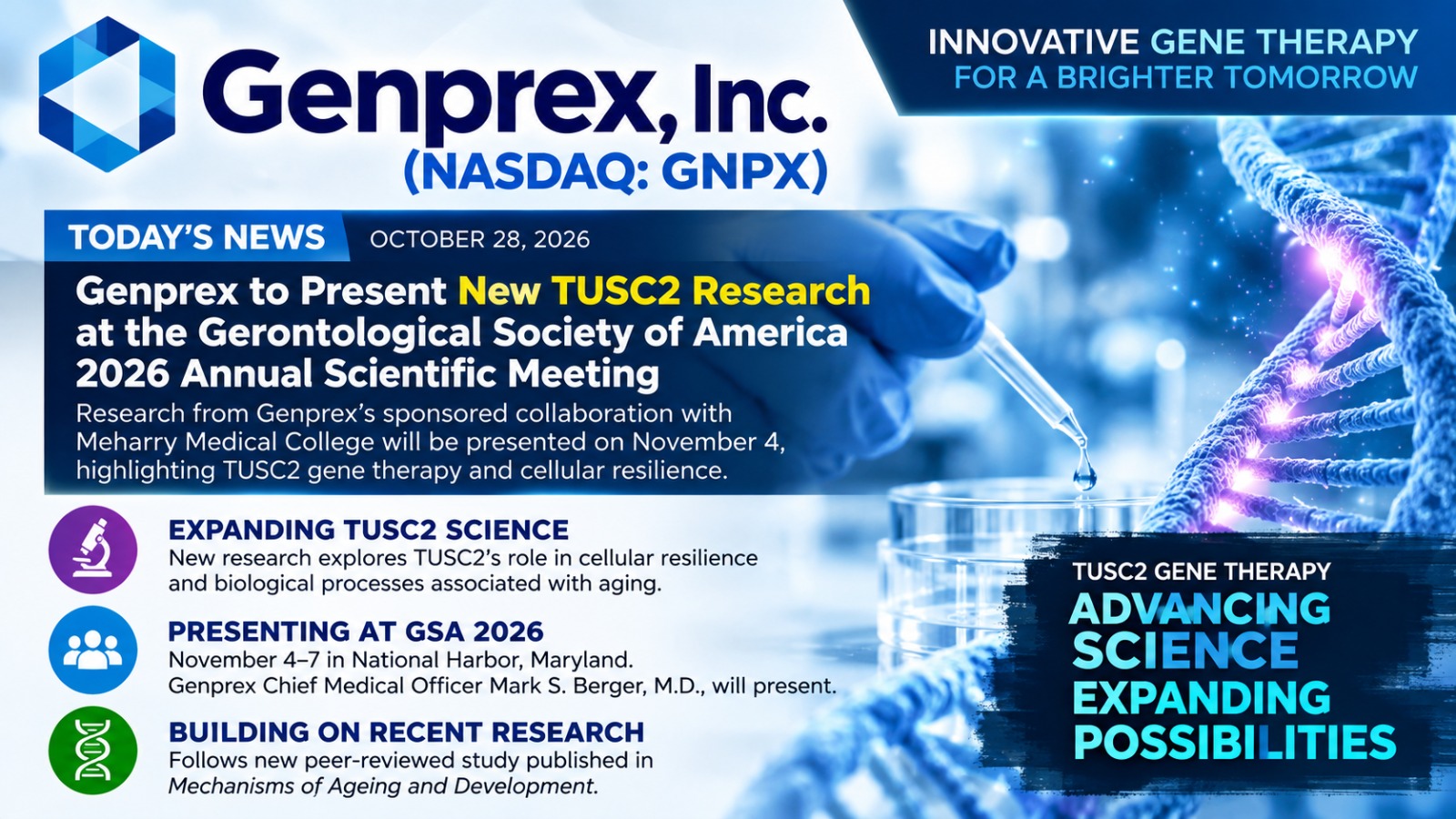
AUSTIN, Texas - Floridant -- Genprex, Inc. (N A S D A Q: GNPX) $GNPX is bringing renewed attention to its gene therapy platform with a new announcement today involving its sponsored research collaboration with Meharry Medical College. The research, centered on TUSC2—the tumor-suppressor gene used in Genprex's investigational REQORSA® gene therapy—will be presented at the Gerontological Society of America (GSA) 2026 Annual Scientific Meeting in November.
For investors following emerging biotechnology companies, this latest development adds another dimension to Genprex's scientific story. The company continues to investigate approaches designed to restore important biological functions, with programs targeting cancer and diabetes. Its expanding research into TUSC2 biology may provide valuable scientific insights beyond the gene's established role in oncology, while its clinical and development programs remain the central focus of its therapeutic ambitions.
Although Genprex remains a clinical-stage company facing the substantial uncertainties associated with drug development, today's announcement gives investors a fresh research milestone to watch as the company advances its broader platform.
Today's News: Genprex to Present New TUSC2 Research in November
Genprex announced on October 28 that research conducted through its sponsored collaboration with Meharry Medical College will be featured at the GSA 2026 Annual Scientific Meeting, scheduled for November 4–7 in National Harbor, Maryland. The presentation will examine TUSC2 gene therapy in relation to cellular resilience and biological processes associated with aging.
The scheduled presentation is titled "TUSC2 Gene Therapy in Humans Induces a Cellular-Resilience Program." It is listed for the conference's Late Breaking Poster Session I on November 4, from 6:00 to 7:15 p.m. Eastern Time. Genprex Chief Medical Officer Mark S. Berger, M.D., is identified as the presenter.
The announcement is notable because TUSC2 is already central to the company's oncology strategy. REQORSA, also known as quaratusugene ozeplasmid, is an investigational gene therapy designed to deliver the TUSC2 tumor-suppressor gene. The collaboration is examining the gene's wider biological activities, including mitochondrial metabolism, cellular stress responses and molecular processes associated with aging.
Genprex established the sponsored research collaboration with Meharry in 2024 and has continued to broaden its investigation into TUSC2 biology. The latest presentation offers another opportunity for the scientific community to examine findings generated through that work.
Importantly, the research should be viewed as an expansion of scientific understanding—not evidence that REQORSA treats aging or age-related diseases. Further investigation would be required to establish whether the findings support additional therapeutic applications.
For investors, the immediate takeaway is that Genprex continues to generate research milestones around a gene that underpins its lead oncology candidate, creating additional scientific visibility while its principal therapeutic programs progress.
More on The Floridant
October 21 Research Adds Another Layer to the TUSC2 Story
Today's announcement follows another important research update released October 21, when Genprex highlighted a peer-reviewed study published in Mechanisms of Ageing and Development. Researchers at Meharry Medical College investigated the role of TUSC2 in maintaining cellular function during brain aging.
The study examined an engineered mouse model in which TUSC2 was absent. Researchers associated TUSC2 loss with disruptions in mitochondrial function, protein quality control and pathways involved in communication between neurons. The effects differed between male and female mice, with more pronounced disruptions observed in males.
The researchers also examined existing human gene-expression datasets, finding that TUSC2 expression declined with age in 11 of 13 brain regions evaluated. Additional reductions were identified in Alzheimer's disease datasets, while comparisons revealed molecular similarities between the mouse findings and human brain-aging data.
Why does this matter to GNPX investors? TUSC2 is not simply a gene being studied in isolation; it is the foundation of the company's lead investigational oncology therapy. A deeper understanding of its biological functions could help researchers explore new scientific questions and refine their understanding of the company's platform.
However, the study was not a clinical trial of REQORSA for Alzheimer's disease, cognitive decline or aging. Any therapeutic implications outside oncology remain exploratory. The near-term investment case therefore continues to depend primarily on progress in Genprex's cancer and diabetes programs.
Roche Diagnostics Collaboration Targets More Personalized Lung Cancer Treatment
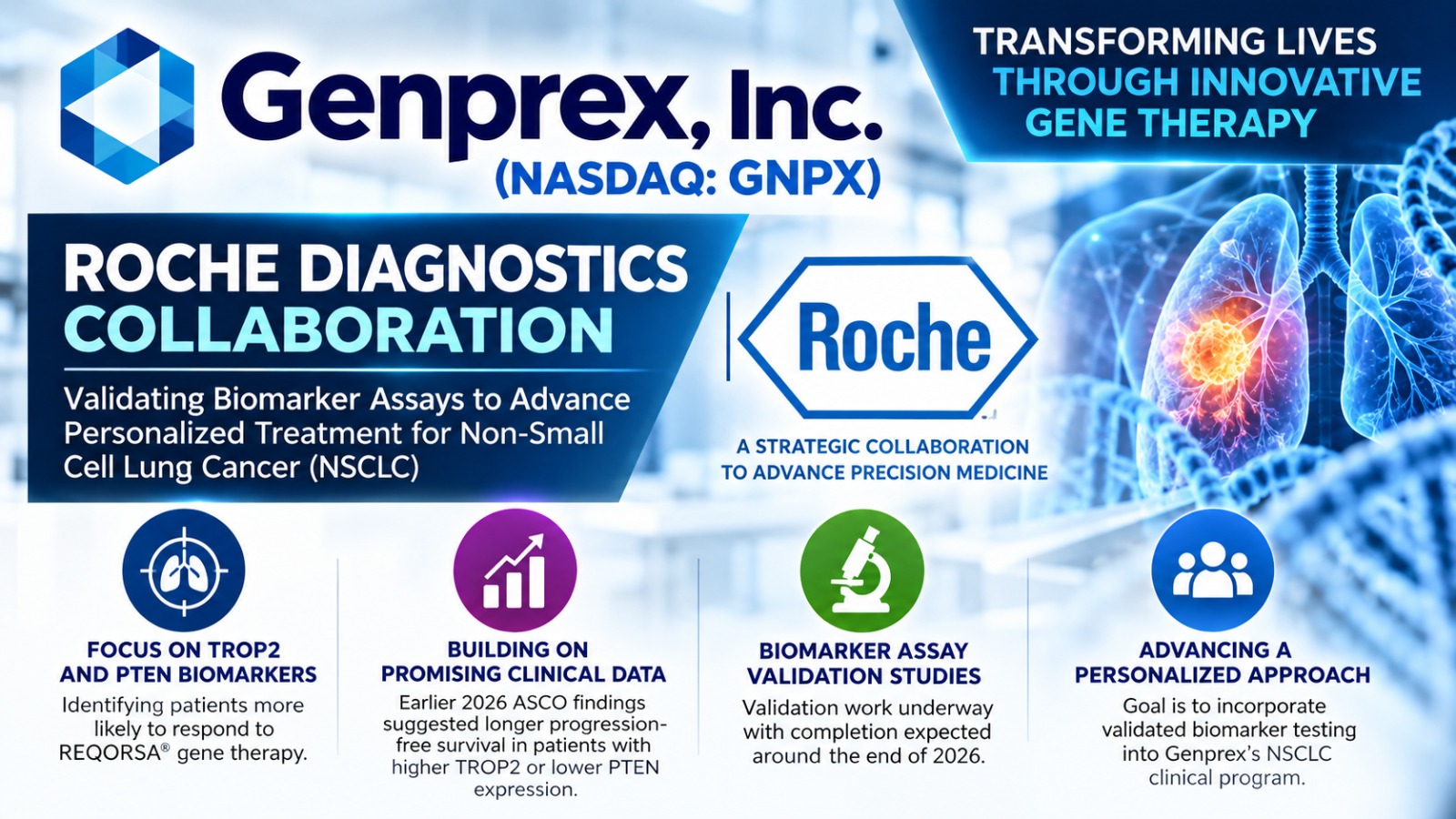
One of Genprex's most consequential recent strategic developments arrived on August 3, when the company announced a collaboration with Roche Diagnostics to conduct biomarker assay validation studies for non-small cell lung cancer (NSCLC).
The collaboration focuses on TROP2 and PTEN, two biomarkers that could help researchers identify patients more likely to respond to REQORSA. Earlier clinical findings presented at the 2026 American Society of Clinical Oncology meeting suggested that patients with higher TROP2 expression or lower PTEN expression experienced longer progression-free survival in the studied patient groups.
The Roche collaboration is designed to validate relevant biomarker testing methods, with Genprex anticipating completion around the end of 2026. Subject to the results, the company expects to evaluate incorporating the validated approach into its NSCLC clinical program.
This is an important development because identifying patients most likely to benefit from a treatment can be a valuable part of clinical development. Better patient selection could help researchers design more targeted studies and improve their understanding of treatment response.
For investors, the milestones to watch include validation results, potential incorporation of biomarker-based selection into clinical trials, and subsequent clinical data. These are prospective opportunities, not guarantees of improved outcomes or regulatory approval.
More on The Floridant
Diabetes Gene Therapy Advances Toward Manufacturing Scale-Up
Genprex is also developing a separate gene therapy program targeting diabetes, giving the company a second major therapeutic area beyond oncology.
On August 18, the company announced that it had selected a U.S.-based contract development and manufacturing organization to begin scaling up production of its adeno-associated virus (AAV)-based diabetes gene therapy. The manufacturing agreement is intended to support production under current Good Manufacturing Practice standards for investigational development and future clinical trials.
The candidate uses the Pdx1 and MafA genes, delivered to the pancreas using an AAV vector, with the goal of restoring insulin-producing beta-cell function.
Genprex has reported encouraging preclinical findings, including sustained blood-glucose improvements in Type 1 diabetes animal models and favorable measures involving insulin requirements, C-peptide and glucose tolerance in non-human primate studies. Related approaches have also shown encouraging findings in Type 2 diabetes models. These results remain preclinical and do not establish effectiveness in humans.
The manufacturing step is nevertheless meaningful: developing a potential therapy requires not only a scientific rationale but also a reproducible production process capable of supporting formal studies. Genprex's work on manufacturing and delivery approaches could help prepare the program for subsequent development milestones.
Additional Developments Investors Should Watch
Several other developments round out Genprex's current investment narrative:
Genprex also reported regaining Nasdaq's minimum-bid-price compliance on August 5. The associated panel requirements included maintaining a closing bid price of at least $1.00 through December 7, 2026, making continued listing compliance another important item to monitor.
$GNPX Outlook: Scientific Progress Meets Important Upcoming Milestones
Genprex enters the final months of 2026 with several developments that warrant attention: fresh TUSC2 research, a scheduled scientific presentation, biomarker validation work with Roche Diagnostics and manufacturing preparations for its diabetes program.
The company's opportunity rests on whether its scientific platform can translate into reproducible clinical benefits and, ultimately, viable treatments. The next meaningful checkpoints include the GSA presentation, further updates on the REQORSA clinical program, Roche-related validation progress and additional diabetes development announcements.
For more information on $GNPX visit: www.genprex.com and https://compasslivemedia.com/gnpx/
Media Contact:
Company Name: Genprex, Inc.
Contact: Kalyn Dabbs
Email: media@genprex.com
Phone: (877) 774-GNPX (4679)
Country: United States
Website: www.genprex.com
DISCLAIMER: https://corporateads.com/disclaimer/
Disclosure listed on the CorporateAds website
For investors following emerging biotechnology companies, this latest development adds another dimension to Genprex's scientific story. The company continues to investigate approaches designed to restore important biological functions, with programs targeting cancer and diabetes. Its expanding research into TUSC2 biology may provide valuable scientific insights beyond the gene's established role in oncology, while its clinical and development programs remain the central focus of its therapeutic ambitions.
Although Genprex remains a clinical-stage company facing the substantial uncertainties associated with drug development, today's announcement gives investors a fresh research milestone to watch as the company advances its broader platform.
Today's News: Genprex to Present New TUSC2 Research in November
Genprex announced on October 28 that research conducted through its sponsored collaboration with Meharry Medical College will be featured at the GSA 2026 Annual Scientific Meeting, scheduled for November 4–7 in National Harbor, Maryland. The presentation will examine TUSC2 gene therapy in relation to cellular resilience and biological processes associated with aging.
The scheduled presentation is titled "TUSC2 Gene Therapy in Humans Induces a Cellular-Resilience Program." It is listed for the conference's Late Breaking Poster Session I on November 4, from 6:00 to 7:15 p.m. Eastern Time. Genprex Chief Medical Officer Mark S. Berger, M.D., is identified as the presenter.
The announcement is notable because TUSC2 is already central to the company's oncology strategy. REQORSA, also known as quaratusugene ozeplasmid, is an investigational gene therapy designed to deliver the TUSC2 tumor-suppressor gene. The collaboration is examining the gene's wider biological activities, including mitochondrial metabolism, cellular stress responses and molecular processes associated with aging.
Genprex established the sponsored research collaboration with Meharry in 2024 and has continued to broaden its investigation into TUSC2 biology. The latest presentation offers another opportunity for the scientific community to examine findings generated through that work.
Importantly, the research should be viewed as an expansion of scientific understanding—not evidence that REQORSA treats aging or age-related diseases. Further investigation would be required to establish whether the findings support additional therapeutic applications.
For investors, the immediate takeaway is that Genprex continues to generate research milestones around a gene that underpins its lead oncology candidate, creating additional scientific visibility while its principal therapeutic programs progress.
More on The Floridant
- Fort Myers Brewing Raises Its Steins One More Time at PROSToberfest, Nov. 7
- Premier Construction Business Brokers Shares 2027 Outlook for Selling FL Construction Businesses
- TradeJARnal Launches Innovative Trading Journal to Help Stock and Options Traders Build Discipline and Smarter Trading Habits
- Pursant Founder Mark Herbick Joins STS Capital Partners as CEO
- Tampa Holiday Sessions: Captured by Mallary Opens 2026 Christmas Minis With Two New Sets
October 21 Research Adds Another Layer to the TUSC2 Story
Today's announcement follows another important research update released October 21, when Genprex highlighted a peer-reviewed study published in Mechanisms of Ageing and Development. Researchers at Meharry Medical College investigated the role of TUSC2 in maintaining cellular function during brain aging.
The study examined an engineered mouse model in which TUSC2 was absent. Researchers associated TUSC2 loss with disruptions in mitochondrial function, protein quality control and pathways involved in communication between neurons. The effects differed between male and female mice, with more pronounced disruptions observed in males.
The researchers also examined existing human gene-expression datasets, finding that TUSC2 expression declined with age in 11 of 13 brain regions evaluated. Additional reductions were identified in Alzheimer's disease datasets, while comparisons revealed molecular similarities between the mouse findings and human brain-aging data.
Why does this matter to GNPX investors? TUSC2 is not simply a gene being studied in isolation; it is the foundation of the company's lead investigational oncology therapy. A deeper understanding of its biological functions could help researchers explore new scientific questions and refine their understanding of the company's platform.
However, the study was not a clinical trial of REQORSA for Alzheimer's disease, cognitive decline or aging. Any therapeutic implications outside oncology remain exploratory. The near-term investment case therefore continues to depend primarily on progress in Genprex's cancer and diabetes programs.
Roche Diagnostics Collaboration Targets More Personalized Lung Cancer Treatment
One of Genprex's most consequential recent strategic developments arrived on August 3, when the company announced a collaboration with Roche Diagnostics to conduct biomarker assay validation studies for non-small cell lung cancer (NSCLC).
The collaboration focuses on TROP2 and PTEN, two biomarkers that could help researchers identify patients more likely to respond to REQORSA. Earlier clinical findings presented at the 2026 American Society of Clinical Oncology meeting suggested that patients with higher TROP2 expression or lower PTEN expression experienced longer progression-free survival in the studied patient groups.
The Roche collaboration is designed to validate relevant biomarker testing methods, with Genprex anticipating completion around the end of 2026. Subject to the results, the company expects to evaluate incorporating the validated approach into its NSCLC clinical program.
This is an important development because identifying patients most likely to benefit from a treatment can be a valuable part of clinical development. Better patient selection could help researchers design more targeted studies and improve their understanding of treatment response.
For investors, the milestones to watch include validation results, potential incorporation of biomarker-based selection into clinical trials, and subsequent clinical data. These are prospective opportunities, not guarantees of improved outcomes or regulatory approval.
More on The Floridant
- Tampa Web Design Launches New Website for Entrepreneur and Capital Markets Advisor Martin Sumichrast
- LifeWorks Wellness Center Welcomes Community to New Treatment Facility
- Miami Dade College and World Affairs Council of Miami announce Navarro-Cabrera scholarship
- LOC8 My Business Tells Agents One AI Screenshot Proves Nothing, Citing 2026 BrightLocal Study
- Wash Ninja® Introduces the Wax Ninja Digital Footprint, Expanding Its Car Care Brand Portfolio
Diabetes Gene Therapy Advances Toward Manufacturing Scale-Up
Genprex is also developing a separate gene therapy program targeting diabetes, giving the company a second major therapeutic area beyond oncology.
On August 18, the company announced that it had selected a U.S.-based contract development and manufacturing organization to begin scaling up production of its adeno-associated virus (AAV)-based diabetes gene therapy. The manufacturing agreement is intended to support production under current Good Manufacturing Practice standards for investigational development and future clinical trials.
The candidate uses the Pdx1 and MafA genes, delivered to the pancreas using an AAV vector, with the goal of restoring insulin-producing beta-cell function.
Genprex has reported encouraging preclinical findings, including sustained blood-glucose improvements in Type 1 diabetes animal models and favorable measures involving insulin requirements, C-peptide and glucose tolerance in non-human primate studies. Related approaches have also shown encouraging findings in Type 2 diabetes models. These results remain preclinical and do not establish effectiveness in humans.
The manufacturing step is nevertheless meaningful: developing a potential therapy requires not only a scientific rationale but also a reproducible production process capable of supporting formal studies. Genprex's work on manufacturing and delivery approaches could help prepare the program for subsequent development milestones.
Additional Developments Investors Should Watch
Several other developments round out Genprex's current investment narrative:
- Clinical biomarker research: Findings presented at ASCO in May 2026 added to the company's investigation of biomarkers associated with REQORSA treatment response.
- Intellectual property: On June 22, Genprex announced a notice of allowance from the Canadian Intellectual Property Office for a patent claim involving REQORSA combined with PD-1 or PD-L1 antibodies for cancer treatment.
- Upcoming scientific visibility: The November 4–7 GSA meeting provides the next specifically announced research presentation highlighted in the October 28 release.
Genprex also reported regaining Nasdaq's minimum-bid-price compliance on August 5. The associated panel requirements included maintaining a closing bid price of at least $1.00 through December 7, 2026, making continued listing compliance another important item to monitor.
$GNPX Outlook: Scientific Progress Meets Important Upcoming Milestones
Genprex enters the final months of 2026 with several developments that warrant attention: fresh TUSC2 research, a scheduled scientific presentation, biomarker validation work with Roche Diagnostics and manufacturing preparations for its diabetes program.
The company's opportunity rests on whether its scientific platform can translate into reproducible clinical benefits and, ultimately, viable treatments. The next meaningful checkpoints include the GSA presentation, further updates on the REQORSA clinical program, Roche-related validation progress and additional diabetes development announcements.
For more information on $GNPX visit: www.genprex.com and https://compasslivemedia.com/gnpx/
Media Contact:
Company Name: Genprex, Inc.
Contact: Kalyn Dabbs
Email: media@genprex.com
Phone: (877) 774-GNPX (4679)
Country: United States
Website: www.genprex.com
DISCLAIMER: https://corporateads.com/disclaimer/
Disclosure listed on the CorporateAds website
Source: CorporateAds
0 Comments
Latest on The Floridant
- Heart Attack Doesn't Slow Down Author Bruce Goldwell — 550 Books Published
- ALight Technology And Services Limited Advances Through Peachscore + Dealum Accelerator and Join LvlUp Labs
- Pellenzo Technologies Inc. Data Analytics and Software Development Company Valued at $100 Million
- International Misophonia Foundation Launches Sensory Accessible Technology Initiative to Address Overlooked Digital Accessibility Barriers
- Lacey Asher Announces Departure From Seranova Ventures and Clarifies The Product BuzZ Leadership
- RAS AP Consulting Advances 1099 Education and Readiness Initiative Through IFOL Training and Finance Technology Showcase
- Lacey Asher Follows in the Footsteps of Hank Asher With the Introduction of Verify One Screening
- RELTO Publishes a Free MLS Photo Rules Database and Asks Every MLS to Correct It
- LKPFM Corporation Announces Confessions of an Innocent Man
- OLENPHOGY Inositol Complex Promotes Internal Equilibrium and Daily Emotional Balance
- OLENPHOGY Magnesium-8 Pro Supports Circadian Rhythm and All-Day Dynamic Recovery
- Governor Ron DeSantis Appoints Thomas Frederick to the Florida Opportunity Fund Board of Directors
- Florida: Governor Ron DeSantis Appoints Seven to the Board of Medicine
- Florida: Governor Ron DeSantis Appoints Two to the Greater Orlando Aviation Authority
- Florida: Governor Ron DeSantis Appoints Three to the Gainesville Regional Utilities Authority
- Florida: Governor Ron DeSantis Appoints Doug Broxson to the Triumph Gulf Coast, Inc. Board of Directors
- Florida: Governor Ron DeSantis Appoints Two to the Board of Chiropractic Medicine
- Florida: Governor Ron DeSantis Reappoints MaryLynn Magar to the State Board of Education
- Florida: MEMORANDUM: Flags at Half-Staff in Honor of John Anderson
- Governor Ron DeSantis Appoints Six to the Florida Historic Commission